


VCSEL Module in Industrial Automation: Enhancing Processes
A VCSEL module (Vertical-Cavity Surface-Emitting Laser module) is a compact laser assembly that integrates a VCSEL gain chip, optics and packaging into a ready-to-use light source. Compared with conventional edge-emitting laser solutions, a VCSEL emits light vertically from the chip surface, which simplifies array design, wafer-level testing and fiber or lens coupling.
At Ace Photonics, we design and manufacture VCSEL modules in the 750–1550 nm range for demanding industrial and automation customers, leveraging decades of GaAs-based VCSEL R&D experience.
What Is a VCSEL Module?
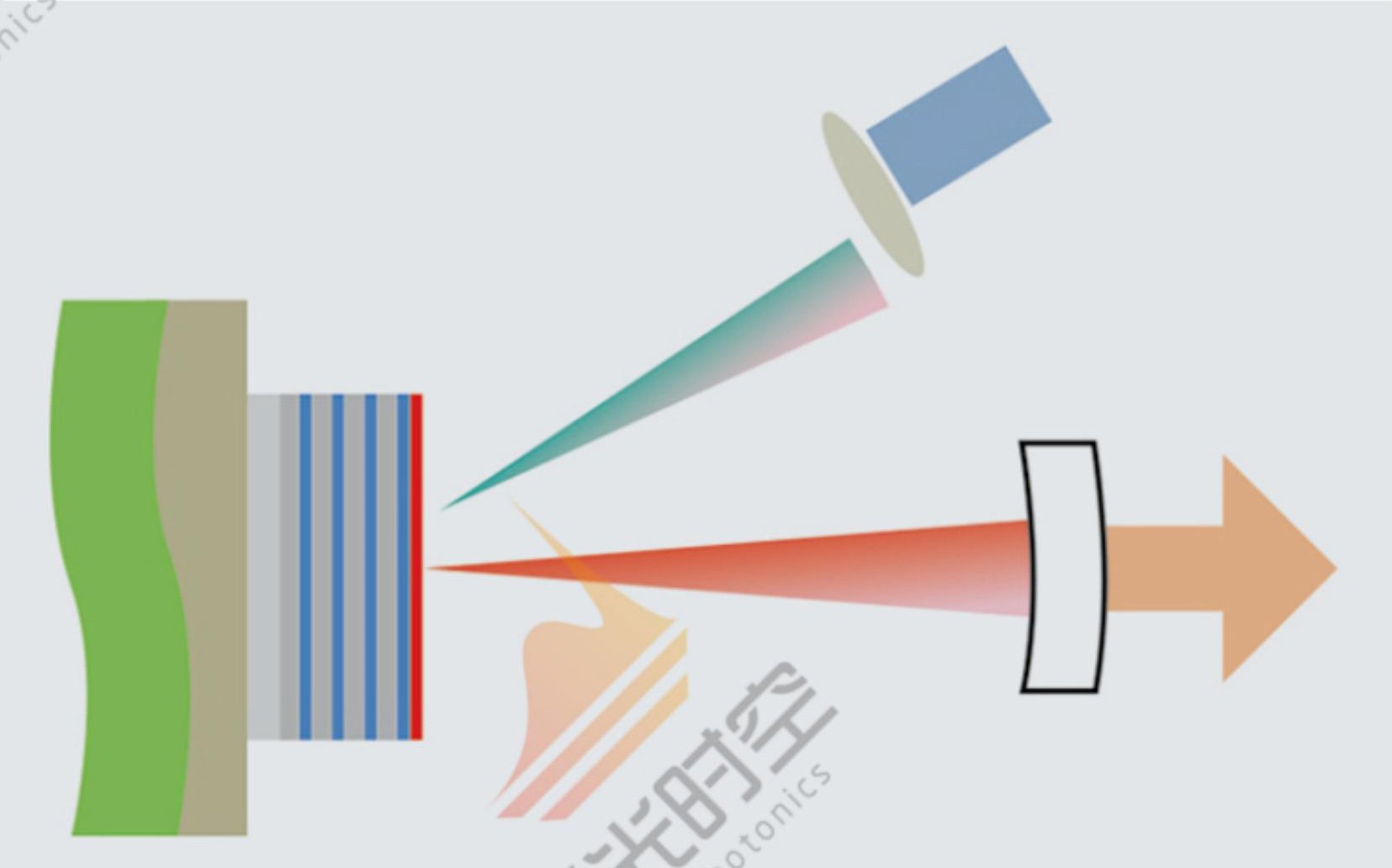
A VCSEL module from a production perspective is more than a single diode:
VCSEL array – multiple emitters on one chip to increase optical power and enable pattern projection or multi-channel sensing.
Microlens array (MLA) – lenses aligned to each emitting channel on a single substrate to control divergence and shape the beam while keeping the footprint small.
Integrated optics – one or more lenses, sometimes including frequency-conversion optics depending on the application, to match the system’s working distance and spot size.
Thermal and mechanical package – SMD or custom housings designed for automated assembly, robust heat dissipation and stable performance over temperature.
This integration turns the bare VCSEL die into a stable, repeatable light source that OEMs can drop into robotic vision heads, laser measurement tools or 3D sensors with minimal additional optics design.
Why VCSEL Modules Matter in Industrial Automation
In automated production lines, a consistent optical source is as critical as mechanics or control algorithms. VCSEL modules provide:
Deterministic, repeatable beams for metrology and inspection
Array scalability for 3D sensing and structured-light projection
Wafer-level binning for tighter wavelength and power tolerances, which translates into predictable system behavior over large deployments
For system integrators, this means faster commissioning, simpler calibration and more stable output over the lifetime of an automation cell.
Key Advantages of VCSEL Modules in Automation
1. High Measurement Accuracy
VCSELs inherently offer narrow spectral width and stable wavelength over temperature, which reduces measurement drift and supports micron-level precision in positioning, gauging and inline inspection.
When integrated into a VCSEL module with MLA optics, the resulting beam distribution is highly uniform, improving the consistency of reflected signals in 3D sensing and distance measurement tasks.
2. Fast Response and High-Speed Modulation
Industrial control loops increasingly rely on real-time 3D data and high-frequency feedback. VCSEL modules support fast modulation, enabling:
High-speed time-of-flight (ToF) ranging
Rapid on/off pulsing for optical encoders and triggers
Low-latency scanning in robotic guidance and sorting
This speed allows automation systems to respond quickly to changing conditions on the production line.
3. Low Power Consumption and Thermal Efficiency
VCSELs achieve high wall-plug efficiency, which lowers power consumption and reduces heat load inside compact sensor heads and enclosed control cabinets.
Because VCSELs exhibit approximately an order of magnitude better wavelength stability versus typical edge-emitting lasers, many configurations do not require bulky active temperature control. This enables smaller VCSEL modules and reduces system-level energy use.
4. Reliability and Long-Term Stability
For industrial automation, downtime is expensive. Ace Photonics designs VCSEL modules with:
Packages suitable for high-temperature operation
Robust soldered mounts and opto-mechanical alignment
Non-magnetic and application-specific housings for sensitive environments
These features make VCSEL modules suitable for continuous operation in harsh conditions while maintaining stable output and minimal recalibration.
Core Automation Applications of VCSEL Modules
Robotic Vision and Machine Guidance
VCSEL modules deliver controlled illumination for cameras and 3D sensors mounted on robots and gantries. Typical uses include:
Object detection and picking
Bin-picking and depalletizing
Path and obstacle detection for mobile robots
Structured-light or ToF systems using VCSEL arrays provide dense depth maps, enabling more accurate trajectory planning and collision avoidance.
Laser Measurement and Inline Metrology
In measurement tools, a VCSEL module serves as a stable ranging source for:
Distance and thickness measurement
Diameter and edge detection on moving parts
Flatness and alignment checks in assembly stations
The tight control of wavelength and beam profile improves repeatability and supports closed-loop process optimization.
3D Sensing for Quality Control
3D sensing VCSEL solutions project patterns or pulses that are measured by dedicated sensors to reconstruct surfaces and volumes. In industrial automation, this enables:
100% inspection of complex geometries
Deformation and warpage analysis
Volume and fill-level monitoring
Accurate spatial data from VCSEL-based 3D sensors helps manufacturers detect defects early and feed data into predictive maintenance and yield-improvement models.
Presence Detection and Safety Systems
Low-power VCSEL modules can be integrated into light curtains, area scanners and safety sensors to detect human presence or unexpected objects in hazardous zones, supporting functional safety concepts in smart factories.
Environmental and Packaging Considerations
Industrial environments expose optical modules to heat, dust, vibration and electromagnetic interference. From a manufacturing standpoint, the VCSEL module design must therefore address:
Package type: SMD and custom packages optimized for automated PCB assembly, sealed optics and robust mechanical attachment.
Thermal management: Substrates and mounts chosen to spread and dissipate heat while keeping junction temperatures within spec.
Wavelength stability vs. temperature: VCSEL structures engineered for high stability reduce the need for precision temperature controllers and simplify integration into sealed, fan-less housings.
Ace Photonics also offers non-magnetic packaging and high-temperature VCSEL solutions, which are particularly relevant for automation near strong magnetic fields or elevated ambient temperatures.
Future Outlook: VCSEL Modules and Industrial AI
As factories move toward AI-driven automation, the role of VCSEL modules becomes even more central. High-quality optical data from 3D sensors, vision systems and metrology tools feeds machine-learning models for:
Predictive maintenance
Automated anomaly detection
Adaptive process control and self-optimizing lines
By combining AI algorithms with reliable, high-resolution sensing from VCSEL modules, manufacturers can increase throughput, reduce scrap and design more flexible production flows that adapt quickly to new products or changing demand.
Ace Photonics supports this transition by offering customized VCSEL arrays and modules tailored to specific automation tasks—from short-range robotic sensing to long-range industrial ToF systems.
Conclusion
For today’s industrial automation systems, the VCSEL module is not just another light source; it is a key enabler of precise, data-rich and energy-efficient processes.
By integrating stable VCSEL arrays, advanced optics and robust packaging, Ace Photonics VCSEL modules support robotic vision, laser measurement and 3D sensing applications that demand accuracy, speed and long-term reliability. As automation and AI continue to advance, these modules will play an essential role in the next generation of smart factories and industrial platforms.